
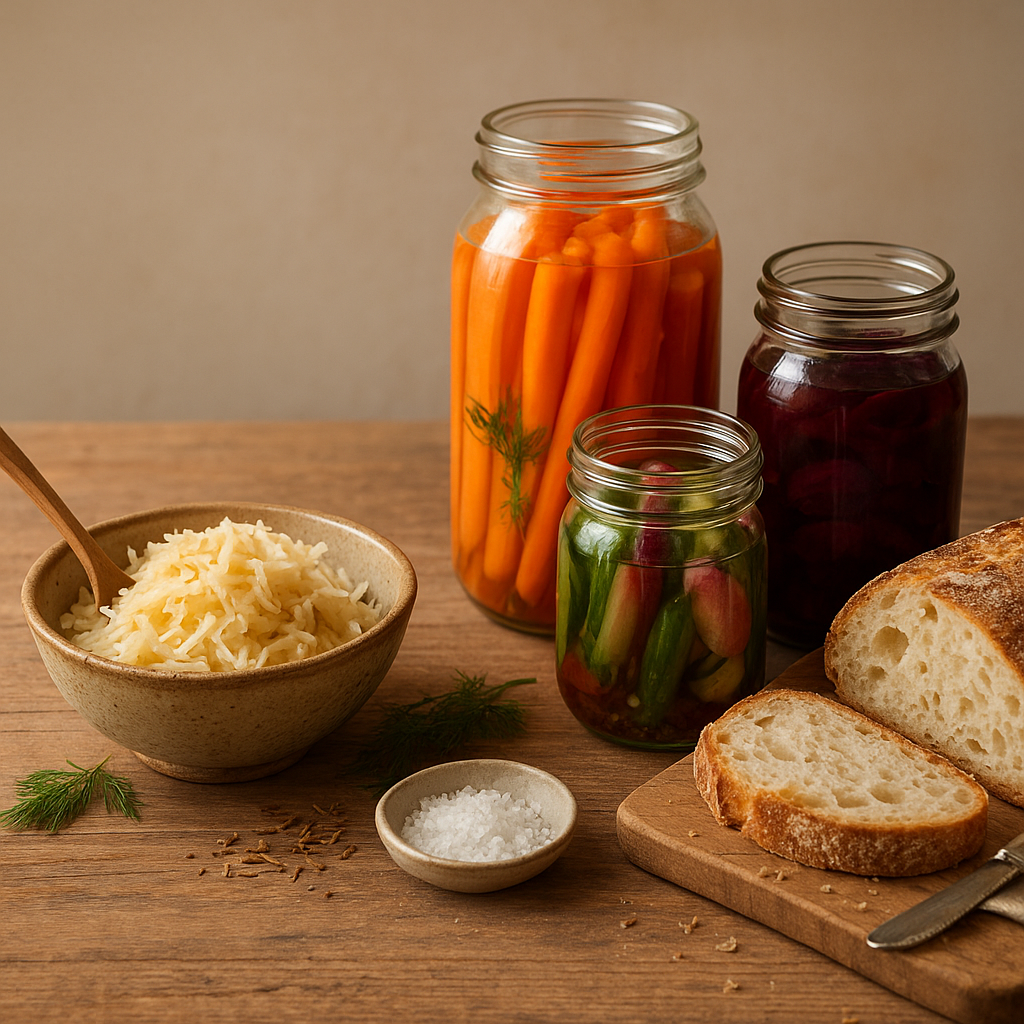
A tangy spoonful of yogurt, the aroma of fresh sourdough, and the savory depth of soy sauce have something in common: fermentation. Long before refrigeration, people used this process to transform perishable ingredients into foods that lasted longer and tasted different. Today, fermentation connects traditional food preservation with modern cooking, nutrition research, and food technology.
Its appeal goes well beyond keeping cabbage through winter. Fermentation can create complex flavors, change texture, improve the availability of certain nutrients, and turn simple ingredients into something entirely new. Understanding how it works also helps explain why a carefully fermented vegetable is not simply a vegetable left to rot.
What Is Fermentation in Food?
Food fermentation is the controlled activity of microorganisms that transform ingredients through their metabolism. Bacteria, yeasts, and molds consume carbohydrates or other compounds and produce substances such as organic acids, alcohol, gases, and flavor molecules.
In biochemistry, fermentation has a narrower meaning involving energy production without an external electron acceptor such as oxygen. In culinary practice, the term is broader: it includes foods such as tempeh and koji, whose production involves molds that need oxygen.
Different microorganisms produce different results. Lactic acid bacteria help turn cabbage into sauerkraut and milk into yogurt. Yeasts produce the carbon dioxide that raises bread dough and the alcohol found in beer and wine. Selected molds supply enzymes that help transform soybeans, rice, and other ingredients.
Successful fermentation depends on the right conditions, including temperature, time, salt concentration, acidity, and oxygen exposure. These conditions favor desirable organisms while helping limit unwanted ones.
The Role of Fermentation in Cooking: Five Key Benefits
Fermentation is both a preservation technique and a flavor-building tool. Its importance in food processing and everyday cooking falls into five main areas.
1. Food Preservation
Acids and alcohol produced during fermentation can make conditions less favorable for many spoilage organisms and pathogens. In vegetable fermentation, lactic acid lowers the pH, helping preserve the food. However, fermentation does not automatically make every product safe at room temperature; many finished foods still require refrigeration.
2. More Complex Flavor
Fermentation produces sour, fruity, earthy, and savory notes that are difficult to replicate with seasoning alone. Miso brings depth to soups and dressings, while fermented hot sauce develops acidity alongside chili flavor. Longer fermentation is not always better: the goal is balance, not maximum sourness.
3. New Textures
Fermentation helps yogurt thicken, bread rise, and tempeh become a cohesive cake of soybeans. Enzymes and acidity can change proteins and starches, giving familiar ingredients distinctly different structures.
4. Changes in Nutrient Availability
Some fermentations reduce compounds such as phytates, which can bind minerals in grains and legumes. Others reduce lactose or partially break down food components. These effects depend on the ingredient and process, so fermentation should not be treated as a universal nutritional upgrade.

5. Greater Ingredient Versatility
Fermentation expands what cooks can do with seasonal produce, grains, and legumes. A batch of fermented cabbage can become a sandwich topping, a side dish, or an ingredient in a savory pancake. This versatility may help reduce waste when fermentation is planned around fresh, sound ingredients.
Real-Life Examples of Fermentation
Fermented foods appear in cuisines worldwide. These everyday examples show how varied the process can be:
- Yogurt: Bacterial cultures convert some milk lactose into lactic acid, creating tanginess and helping milk proteins form a gel.
- Sauerkraut and kimchi: Lactic acid bacteria ferment vegetables under controlled salt and temperature conditions.
- Sourdough: Yeasts and lactic acid bacteria work together, producing gas, acidity, and distinctive aromas.
- Beer and wine: Yeasts convert fermentable sugars into alcohol and carbon dioxide.
- Tempeh: Selected molds grow through cooked soybeans, binding them into a firm cake.
- Miso and soy sauce: Koji-derived enzymes break down starches and proteins; additional microbial activity helps develop their complex flavors.
- Cacao: Fermentation of the pulp surrounding cacao beans helps initiate changes essential to chocolate flavor development.
These foods are not interchangeable from a safety standpoint. A successful yogurt method will not necessarily work for vegetables, and a vegetable-fermentation method should not be adapted casually to meat or fish.
Is Fermentation Basically Rotting?
No. Fermentation and spoilage both involve biological changes, but they differ in their organisms, conditions, and outcomes.
Fermentation deliberately encourages a desirable microbial community. Salt, starter cultures, temperature control, and other process steps guide that community toward a useful result. Rotting is uncontrolled deterioration that may produce unpleasant odors, unwanted textures, or harmful compounds.
The distinction is not simply whether a food smells strong. Some properly fermented foods have powerful aromas. Conversely, dangerous contamination may produce no obvious smell at all. Safety comes from a validated process, not from tasting a questionable batch or assuming that sourness proves it is safe.
Modern Applications of Fermentation Techniques
Restaurant Flavor Development
Modern kitchens use fermented vegetables, cultured dairy, koji, and other techniques to build layered flavors. Chefs may incorporate kimchi brine into a dressing or use miso to season butter. These applications draw on established traditions while adapting them to new dishes.
For home cooks, the simplest approach is often to cook with an existing fermented ingredient. Try a small spoonful of miso in a mushroom sauce, yogurt in a marinade, or chopped sauerkraut in a potato salad. Taste before adding salt, since many fermented condiments already contain substantial sodium.
Plant-Based Foods and Ingredient Development
Fermentation can change the flavor and texture of plant ingredients. Food producers use cultures to make some plant-based yogurt alternatives and cheese-style products, while fungal fermentation produces foods such as tempeh and certain mycoprotein products.
Precision fermentation takes a different approach: microorganisms are used to produce targeted substances, such as enzymes or specific proteins. Those substances can then become food ingredients. Their labeling, allergen considerations, and regulatory requirements depend on the ingredient and jurisdiction.
Food Preservation and Byproduct Use
Researchers also study fermentation as a way to convert suitable food-processing byproducts into useful ingredients. This can include developing flavor compounds or improving the functionality of plant materials. Commercial applications require safety testing and process control; fermentation is not a way to rescue spoiled food.
Fermented Foods and Gut Health: What Research Shows
Interest in fermented foods has grown partly because of research on the gut microbiome. A Stanford study published in 2021 assigned 36 healthy adults to diets emphasizing either fermented foods or high-fiber foods. During the 10-week intervention, the fermented-food group showed increased microbiome diversity and reductions in several inflammatory markers.
That is promising evidence, but it was a small study—not proof that every fermented food delivers the same benefit or treats disease.
Fermented does not automatically mean probiotic. A probiotic must contain live microorganisms with a demonstrated health benefit at an appropriate dose. Some fermented foods contain living microbes, but others are heated, filtered, or pasteurized. Sourdough bread, for example, is fermented before baking, but baking kills the starter organisms.
Nutritional trade-offs still matter. Fermented vegetables and condiments may be high in sodium; sweetened yogurt may contain substantial added sugar. Alcoholic fermentation does not make beer or wine a health food. Choose products according to their full nutritional profile, not the fermentation label alone.
How to Start Fermenting Food Safely at Home
A basic vegetable ferment can be an approachable project, but the recipe should come from a reliable food-preservation source. The National Center for Home Food Preservation’s sauerkraut guidance, for example, specifies salt proportions, temperatures, and handling instructions rather than leaving them to guesswork.
Follow a Tested Process
- Start with fresh ingredients: Remove damaged portions and wash produce as directed. Do not ferment food that is already spoiled.
- Measure accurately: Follow the recipe’s salt amount and measurement method. Too little salt can undermine the intended process.
- Use suitable equipment: Choose clean, food-grade containers and avoid reactive metals.
- Keep vegetables submerged: For brine-based vegetable ferments, use an appropriate weight to hold solids below the liquid.
- Control temperature: Stay within the tested recipe’s recommended range. Temperature affects both fermentation speed and microbial activity.
- Allow gas to escape safely: Use equipment designed for fermentation; pressure can build in tightly sealed, unsuitable containers.
- Store correctly: Refrigerate or preserve the finished food according to the recipe’s instructions.
Know What Not to Improvise
A measured pH can help assess acidity, but it cannot replace a tested process. A pH of 4.6 or below does not, by itself, establish that a homemade ferment is shelf-stable. Other factors, including processing and storage, matter.
Discard batches with visible mold, putrid odors, or unexpected sliminess rather than trying to salvage them. Some harmless surface yeasts can resemble contamination, but beginners should not rely on visual guesses. Never taste a suspect batch to determine whether it is safe.
Meat, seafood, and specialized low-salt fermentations require particular expertise and controls. They are not good starting points for experimentation.
Conclusion
Fermentation plays a central role in cooking by preserving food, developing flavor, changing texture, and expanding ingredient possibilities. It connects everyday staples such as yogurt and bread with modern food research and manufacturing. Its nutritional benefits are promising but food-specific, and its safety depends on controlled conditions. Whether using miso in dinner or making sauerkraut, the best results come from understanding the process and following reliable methods.